


Root Canal Retreatment in Murray, Utah
Experienced care for previously treated teeth that need renewed attention.
While root canal therapy is highly successful, sometimes a tooth may not heal as expected—or symptoms can return months or even years later. At Peak Dental Utah, we provide advanced root canal retreatment to correct complications, relieve pain, and help preserve your natural tooth whenever possible.
Our team in Murray delivers expert endodontic care with precision and clarity, supporting long-term results for even the most complex cases.
What Is Root Canal Retreatment?
Root canal retreatment is a second procedure performed on a tooth that was previously treated with root canal therapy but has become re-infected, painful, or compromised due to incomplete healing, new decay, or structural issues.
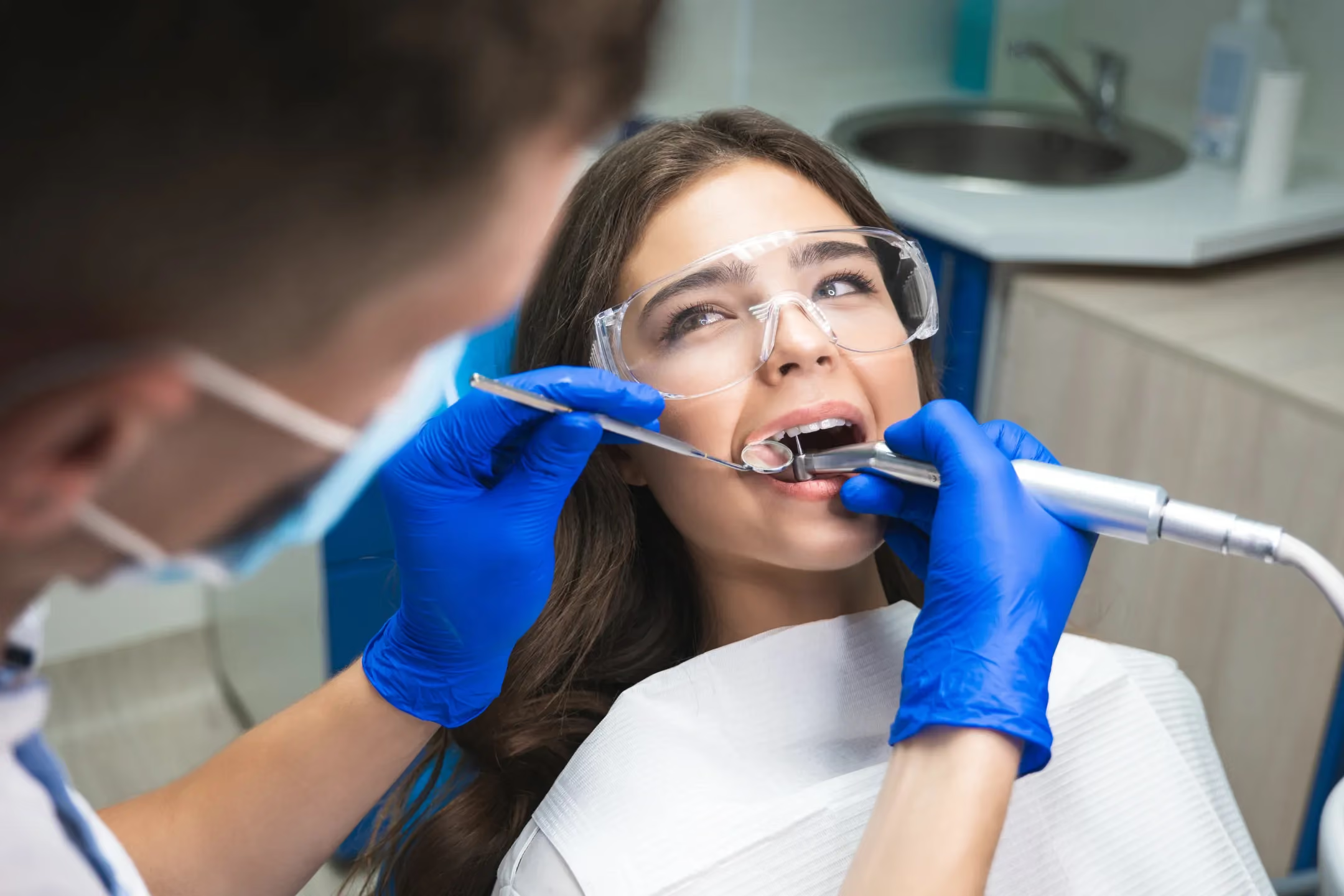
Retreatment involves reopening the tooth, removing previous filling materials, re-cleaning and disinfecting the canal, and resealing it to restore function and eliminate infection.
Signs You May Need a Retreatment
You may be a candidate for retreatment if you’re experiencing:
- Persistent or recurring pain in a previously treated tooth
- Swelling or tenderness around the gums
- Sensitivity to pressure or temperature
- Discoloration or a feeling of pressure in the tooth
- Development of a gum bump or abscess near the tooth
If you're unsure whether your symptoms are related to a past root canal, we’ll assess the area using digital imaging and clinical testing.
Common Reasons a Root Canal May Fail
- Complex or curved root canals were not fully cleaned
- A canal was missed during the original treatment
- Delay in placing a permanent restoration (like a crown)
- Breakdown of the existing restoration or crown
- New decay or trauma exposing the inner tooth
- Cracks in the root or tooth structure
Our goal with retreatment is to address the root cause, prevent further complications, and give the tooth the best chance of long-term success.
Retreatment Process at Peak Dental Utah
- Evaluation & Imaging
We begin with digital X-rays and, if needed, 3D scans to assess the current condition of the tooth and root structure. - Access & Removal
The crown or filling is removed to access the root canal. We then clear out the old filling material. - Disinfection & Re-shaping
The canal is thoroughly cleaned, reshaped, and disinfected using advanced instruments and techniques. - Refill & Seal
We reseal the canal with a biocompatible material and may place a temporary filling to monitor healing. - Final Restoration
Once healing is confirmed, a new dental crown or restoration is placed to protect the tooth.
Depending on the complexity, retreatment may require more than one visit. If retreatment is not viable, we’ll discuss alternative options such as tooth extraction and dental implants.
Is Root Canal Retreatment Worth It?
Absolutely—if the tooth is structurally sound and retreatment can restore health, it’s typically more cost-effective and less invasive than extraction and replacement. Our dentists will clearly explain your prognosis and whether retreatment is the most practical option.
Why Choose Peak Dental Utah?
Dr. S. Michael Vaughan and Dr. Roxanna Dobran emphasize long-term solutions and patient-centered care. With advanced diagnostics, gentle techniques, and strong restorative skills, we treat retreatment cases with the same level of attention and precision as initial root canals.
We also offer same-day emergency care if you’re in pain or need prompt evaluation.
Frequently Asked Questions
Lorem ipsum dolor sit amet, consectetur adipiscing elit. Suspendisse varius enim in eros elementum tristique. Duis cursus, mi quis viverra ornare, eros dolor interdum nulla, ut commodo diam libero vitae erat. Aenean faucibus nibh et justo cursus id rutrum lorem imperdiet. Nunc ut sem vitae risus tristique posuere.
Is it painful to have a root canal done?
Root canal treatment is performed with local anesthesia, so most patients feel little to no pain during the procedure.
How many days does it take to recover from a root canal?
Most patients recover within a few days. Mild tenderness or sensitivity is normal and should gradually improve.
What should I avoid after a root canal?
Avoid chewing hard or sticky foods on the treated tooth until your dentist confirms it is fully restored. Follow all aftercare instructions.
What are the signs I need a root canal?
Common signs include persistent tooth pain, sensitivity to hot or cold, swelling, pain when biting, or a gum bump near the tooth.
Does insurance cover retreatment?
Many dental insurance plans do cover retreatment. We’ll help verify your benefits and provide a clear estimate.

Experiencing Symptoms After a Previous Root Canal?
Don’t wait for symptoms to worsen. We’re here to help you protect your smile and avoid unnecessary tooth loss. Root canal retreatment is a proven, conservative solution when performed promptly and properly.